A salt pond can look quiet from a passing car. That does not mean its story is quiet. The island’s salt landscapes connect to demanding work, household livelihoods and memories that deserve more than a picturesque caption.
At Amuseum Naturalis, heritage interpretation brings ordinary lives into view. One exhibit draws on the recollections of Elise Hyman, who worked at the Orient Bay salt pond. Her account connects the place to the labor of collecting and moving salt. It is an invitation to understand a landscape through someone who knew it through work.
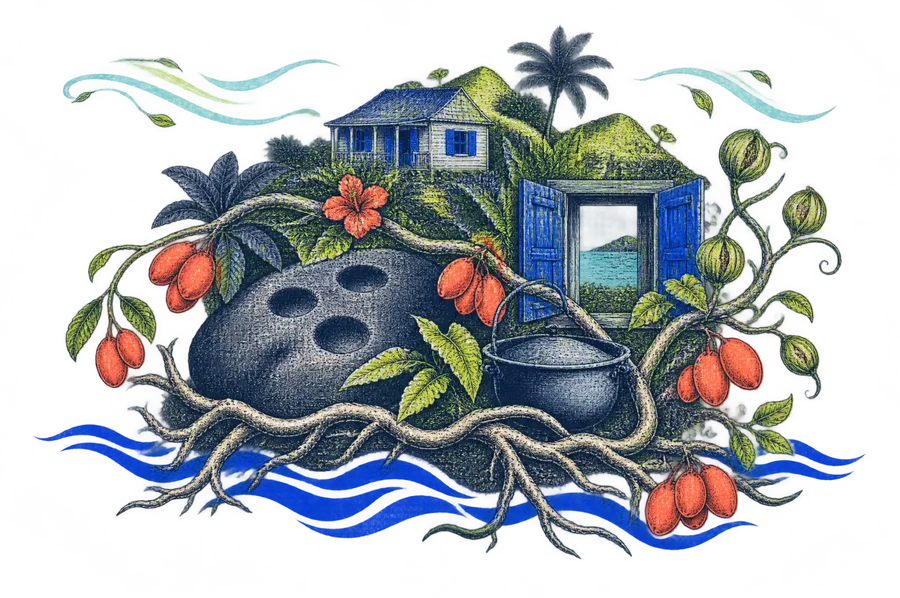
The history reaches further back. The Moho Stone in French Quarter carries Indigenous carvings whose precise age cannot simply be read from the rock. Learning about it challenges the habit of beginning every island story with a European arrival. Start with the museum’s interpretation, and respect the distinction between learning about a site and having permission to visit it.
History also includes enslavement and struggles for freedom. Those subjects belong alongside the forts, harbors and attractive facades. Give them room. A thoughtful visit might end with fewer photographs and a few better questions: whose work made this place possible, whose voice is telling the story, and what should we keep listening for?